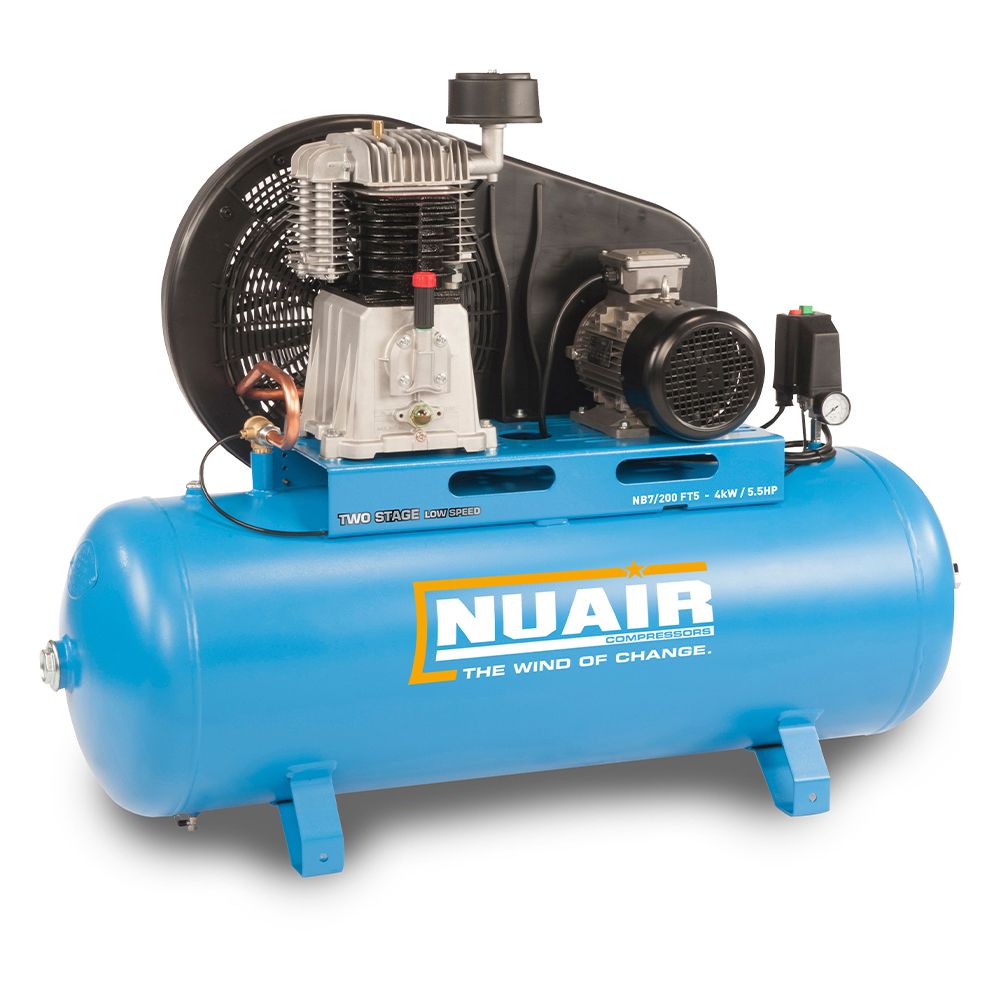
A receiver certificate sits with the insurance records. LEV reports live with health and safety. Hydraulic oil results remain in maintenance, while compressor energy data goes to finance. A factory utilities audit for compressed air, pneumatics, hydraulics and LEV brings those records back to the equipment they describe.
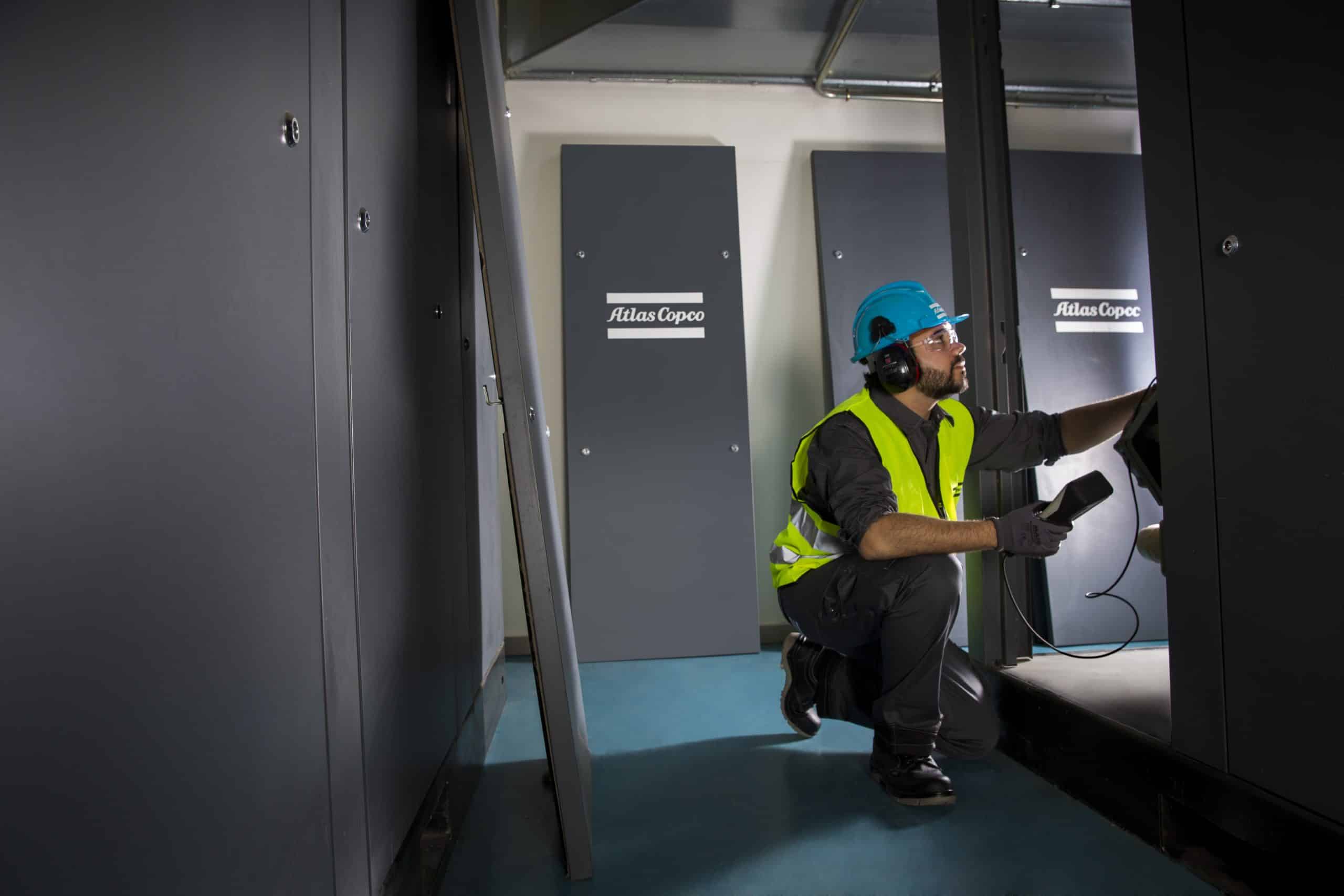
Control Gear Group, specialists in compressed air and industrial equipment, audits these systems across manufacturing sites in Wales and surrounding regions. The purpose is to establish what is installed, which regulations apply, how the equipment performs under production conditions and where energy or reliability is being lost.
Why Audit Factory Utilities as One Connected System?
Compressed air, pneumatics, hydraulics and local exhaust ventilation perform different jobs, but they often share production demands, maintenance resources and energy budgets. Examining each system in isolation can conceal the reason for a recurring fault.
A pneumatic cylinder may be replaced several times when the underlying problem is unstable pressure or contaminated air. An LEV fan may appear undersized when blocked filters or altered ductwork have moved its operating point. A hydraulic valve may become sluggish because contamination is passing through an unsuitable filter rather than because the valve itself is defective.
The benefits of a compressed air audit provide one part of this picture. A factory-wide utilities audit extends the same measurement-led approach to the equipment that uses compressed air and to separate hydraulic and extraction systems.
Audit Outcomes
The audit should establish five things:
- Which assets and system boundaries are included.
- Which statutory inspection or examination requirements apply.
- Whether actual performance matches the intended operating condition.
- Where energy, pressure, airflow or fluid condition is being lost.
- Which actions are required immediately and which can enter a planned improvement programme.
This prevents a maintenance issue, an energy project and a compliance action from being logged as three unrelated jobs when they have the same underlying cause.
Which Regulations Affect the Audit Scope?
A utilities audit is not itself a substitute for a statutory examination. It should identify the applicable duties, confirm whether the required records exist and separate legal findings from engineering recommendations.
PSSR and Compressed Air Equipment
The Pressure Systems Safety Regulations 2000 apply to defined pressure systems containing relevant fluids. According to the Health and Safety Executive’s PSSR guidance (hse.gov.uk), relevant fluids include:
- Steam at any pressure
- Compressed or liquefied gas, including air, above 0.5 bar relative to atmospheric pressure
- Pressurised hot water above 110°C
- Gas dissolved under pressure in a solvent
Before qualifying pressure equipment is used, a written scheme, known as a WSE, must be in place and the equipment it covers must have been examined.
Regulation 8 prohibits the operation of a qualifying system without a valid WSE. For systems containing a relevant fluid other than steam, the commonly applicable threshold is a pressure-volume product of 250 bar-litres or more for a pressure vessel within the system. The exact scope still needs to be determined from the installed equipment, its contents and the applicable exceptions.
A factory audit should compare the WSE against the current installation. Receivers, protective devices, associated pipework and other covered equipment may have been added, removed or modified since the scheme was written. A certificate that describes an old plant arrangement does not resolve the risk presented by the equipment now in service.
COSHH and LEV Performance
Local exhaust ventilation is an engineering control under the Control of Substances Hazardous to Health Regulations 2002. Its job is to capture dust, fume, mist, vapour or gas before workers breathe it.
The HSE’s LEV guidance (hse.gov.uk) explains how employers should maintain LEV systems and arrange thorough examination and testing. The examination interval should reflect the process, system and applicable legal requirements because wear, contamination or the process itself can cause performance to deteriorate.
A Thorough Examination and Test must assess whether the system still performs as intended. A running fan and a current label do not prove adequate control. The examiner needs design or commissioning information where available, including the intended hood arrangement, airflow and other performance criteria.
The audit should also check what has changed since commissioning. Moving a hood, extending a duct, replacing a fan or altering a production process can affect capture performance even when the equipment remains mechanically functional.
ESOS and Energy Evidence
The Energy Savings Opportunity Scheme applies to qualifying large UK undertakings and corporate groups. Current GOV.UK ESOS guidance (gov.uk) sets out the qualification test, routes to compliance and reporting duties for Phase 4.
Qualifying organisations should confirm the applicable Phase 4 qualification and notification dates against the current guidance. The assessment covers energy used by buildings, transport and industrial processes. It must identify significant energy consumption and energy-saving opportunities using verifiable data where reasonably practicable.
A compressed air survey can contribute useful evidence, but it does not automatically constitute the organisation’s full ESOS assessment. Audit records should identify the measurement period, production conditions, energy consumption, assumptions and calculation method so that an ESOS lead assessor can determine how the findings fit into the wider assessment.
What Should the Compressed Air Audit Measure?
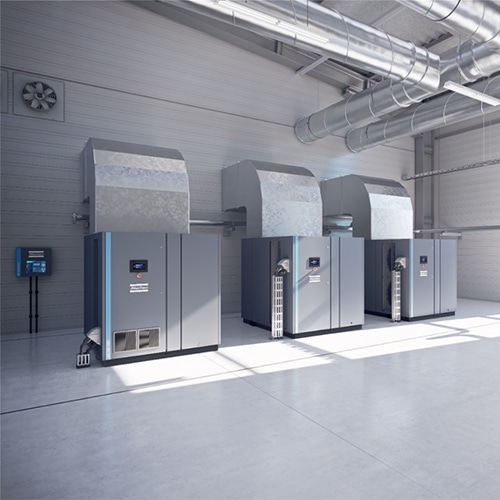
A compressor room walk-through can identify obvious defects, but it cannot show how the system responds across different shifts. A useful audit measures supply and demand while production conditions change.
Measurement Plan
Depending on the installation, the measurement plan may include:
- Compressor power consumption and loaded or unloaded running
- Airflow from individual machines or the compressor station
- Pressure at the compressor discharge, receiver and critical points of use
- Pressure drop across dryers, filters and distribution pipework
- Demand during production, breaks, shutdowns and weekends
- Compressor sequencing and load sharing
- Dew point or air-quality measurements where the application requires them
- Leakage locations, estimated flow loss and repair priority
For variable production, non-intrusive logging may run continuously for 7 to 14 days. This captures demand patterns that a single shift survey could miss, including weekend baseload, simultaneous compressor operation and short peaks that cause local pressure loss.
Leakage often develops at the point of use, including push-fit connectors, degraded tubing and malfunctioning drains.
That distribution matters. Replacing a compressor will not correct dozens of small leaks downstream. Before committing capital, an energy audit for air compressors should establish whether the apparent capacity problem is genuine demand, leakage, excessive system pressure or poor control.
How Do Pneumatics Change the Audit?
A compressor audit measures how air is generated and distributed. The pneumatic assessment follows that air into the equipment that consumes it.
Engineers should inspect regulators, filters, lubricators, valves, cylinders, manifolds, tubing and fittings at representative machines. The operating pressure should be measured at the point of use while the machine cycles, not only at the ring main during an idle period.
Common findings include regulators set higher than the application requires, open blowing points, damaged tubing, leaking actuator seals and pressure loss through poorly maintained air-preparation equipment. A filter with an unnecessarily fine rating may also create avoidable restriction, while inadequate filtration can shorten valve and seal life.
The production context matters. A brief pressure drop may be harmless on one machine but cause incomplete cylinder travel or a failed sequence on another. Maintenance teams should record the lowest acceptable point-of-use pressure and the duty cycle of the equipment before changing compressor setpoints.
The same relationship between generation, distribution and point-of-use demand is covered in our guide to efficient, compliant compressed air for Worcester manufacturers. Although every site has a different load profile, the engineering principle is consistent: measure the system under working conditions before specifying additional capacity.
Hydraulic Systems Require a Different Test Plan
Standard liquid hydraulic systems are generally outside PSSR because hydraulic oil is not classed as a relevant fluid.
That exemption must not be mistaken for evidence that the hydraulic system is safe or reliable. The audit still needs to address stored mechanical loads, hot surfaces, hose condition, fluid injection hazards and the controls used to isolate energy before maintenance.
Condition and Reliability Checks
A hydraulic assessment should cover:
- Reservoir level, temperature and signs of aeration
- Fluid condition and available laboratory results
- Filter type, rating, condition indicators and replacement history
- Pump noise, heat generation and pressure stability
- Cylinder drift and internal leakage
- Valve response and repeatability
- Hose age, routing, abrasion, bend radius and fitting condition
- Gas-charged hydraulic accumulators, which are pressure systems under PSSR and require WSE coverage and periodic recertification, work that Control Gear carries out
Modern hydraulic valves contain small internal clearances. Contamination that cannot be seen in a sight glass can still cause abrasive wear, sticking spools and unstable movement. Oil colour alone is not an adequate condition test.
Hoses exposed to vibration, heat or tight bends also need planned replacement criteria. Waiting for visible leakage can leave the site managing an unplanned shutdown, contaminated floor and loss of machine availability.
Control Gear’s hydraulics engineers can assess pumps, filtration, cylinders, valves, hose assemblies and system behaviour together. That matters where a recurring component failure is being caused elsewhere in the circuit.
What Makes an LEV Audit Technically Useful?
LEV performance begins at the contaminant source. The audit should observe the actual task, including where the operator stands, how the material is handled and the direction in which dust or fume is released.
The examiner can then assess the extraction hood, branch ducts, dampers, filters, fan and discharge arrangement. Relevant measurements may include capture or face velocity, duct velocity, static pressure and total airflow. The correct measurement depends on the hood and process.
A comparison against design performance is much stronger than a pass or fail based on current airflow alone. Where commissioning data is missing, the report should say so. It may still document present performance and required repairs, but the missing baseline remains an unresolved limitation.
Daily and weekly checks also have a different purpose from the statutory examination. Operators can spot damaged hoses, blocked indicators, loose connections or abnormal dust escape between formal tests. The formal report does not remove the need for these routine controls.
Turning Measurements Into an Actionable Report
A factory utilities report needs to work for maintenance, health and safety, energy management and capital approval. Each finding should identify the evidence, consequence, proposed action and responsible owner.
A practical reporting structure separates findings into four classes:
| Finding Class | Typical Evidence | Decision Supported |
|---|---|---|
| Statutory or safety | Missing WSE coverage, overdue LEV examination, failed protective device | Stop, restrict or arrange competent examination |
| Reliability | Hose deterioration, unstable pressure, contaminated oil, poor cylinder response | Repair, replace or investigate |
| Energy | Leakage, artificial demand, unloaded compressor running, excessive pressure drop | Costed efficiency work |
| Capital | Insufficient capacity, unsuitable control arrangement, equipment at end of life | Replacement or redesign |
Energy findings should show the measurement period and operating assumptions. A leakage cost based on one electricity tariff, one pressure and a stated annual running period is useful. A large savings figure without those inputs cannot be checked by procurement or finance.
Recommendations should also be sequenced. A site should normally repair known leaks and confirm genuine demand before ordering a larger compressor. Likewise, replacing an LEV fan before checking the filter, duct condition and hood arrangement may spend capital without restoring control.
When Should the Audit Be Repeated?
There is no single repeat interval covering every factory utility. Statutory examination dates, condition monitoring and energy reviews answer different questions.
A new audit or targeted reassessment is justified when:
- Production hours or shift patterns change
- A new compressor or major machine is connected
- Pneumatic demand increases without an obvious reason
- Hydraulic oil condition or component life deteriorates
- An LEV hood, duct, fan or process is modified
- Energy consumption rises without matching output
- The WSE no longer reflects the installed pressure system
- Previous savings have not been verified after implementation
Leak surveys may need to be repeated because repaired systems develop new leaks through vibration, wear and repeated disconnection. Continuous flow monitoring can show when baseload consumption begins rising again, allowing a targeted survey before losses return to their previous level.
Preparing the Site for an Audit
The best starting point is an accurate asset and process picture. Before the visit, assemble:
- Compressor, receiver and dryer details
- The current WSE and examination reports
- The latest LEV commissioning and test records
- Hydraulic schematics and oil analysis reports
- Energy bills or half-hourly electricity data
- Production and shift schedules
- Known pressure, extraction or reliability complaints
- Details of planned machinery or process changes
Our engineers can then define the measurement points, logging period and production conditions required. Depending on the findings, Control Gear can support compressed air data logging, leak detection, flow monitoring, WSE work, hydraulic investigation and LEV testing.
The resulting evidence helps facilities and procurement teams distinguish repair work from compliance action and capital investment. It also gives management a defensible basis for deciding which work should proceed first.
If your records are split between departments, your WSE predates the current compressor installation or your LEV report cannot be compared with design performance, arrange a site review before the next capital budget is fixed. Send us the asset list, operating hours, available inspection records and known production issues so we can define an audit around the systems currently in use.