
Home / Our Services / Energy Recovery in Air Compressor Systems
Energy Recovery in Air Compressor Systems
Energy recovery systems take the heat that your air compressor already makes and use it to heat water or air in another part of your building.
It’s one of the simplest ways to lower your energy costs – and your carbon emissions.
It’s important to have industrial air compressors. But on the other hand, they also use up a lot of energy – and can make up 10–12% of a site’s total electricity bill.
The process of compressing air is not very efficient; 80–94% of the electrical energy that goes into a compressor is turned into heat, which is then vented and wasted.
This process creates a “triple cost”:
- Wasted Power: You pay for the electricity to run the compressor.
- Added Cooling Load: You pay for additional cooling or ventilation to remove the waste heat.
- Duplicate Heating Bills: You pay a second time for gas or electricity to heat water or air elsewhere in your facility.
How Does Compressor Heat Recovery Work?
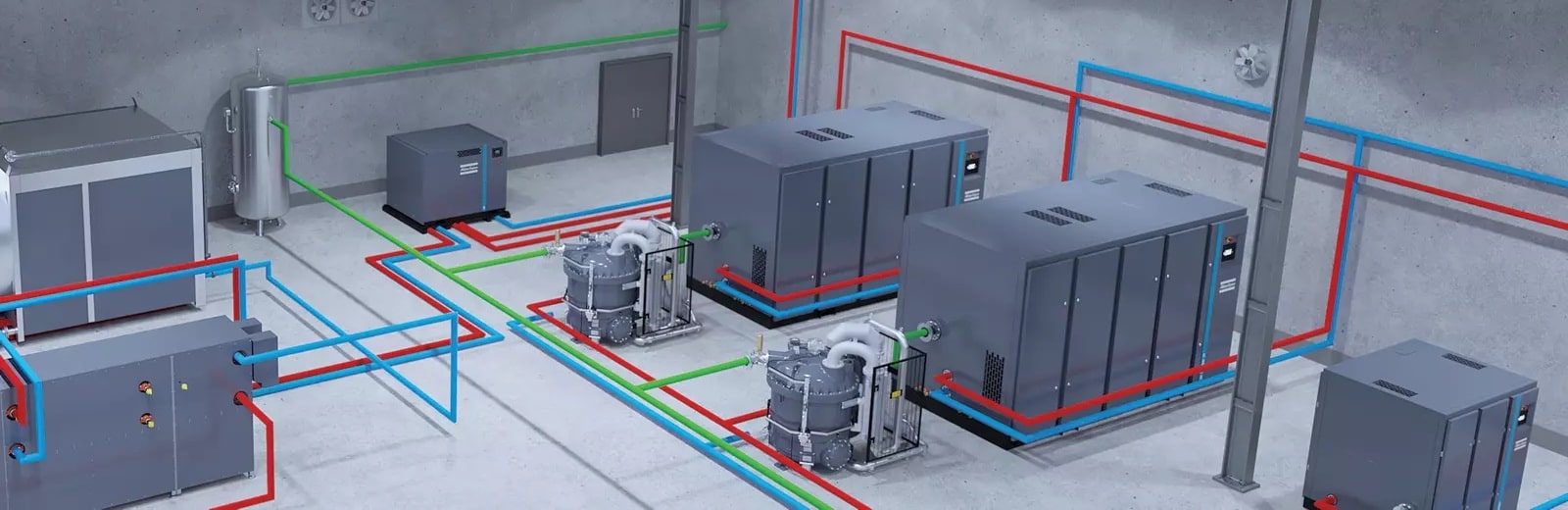
Heat recovery transfers heat from the compressor’s cooling system into air or water through a heat exchanger or ducting setup. The two main ways to recover are through the air and through water. Hydronic recovery is the most flexible and common method used in factories.
What is Airborne Heat Recovery?
What is Airborne Heat Recovery?
Airborne recovery is a simple and effective way to do things.
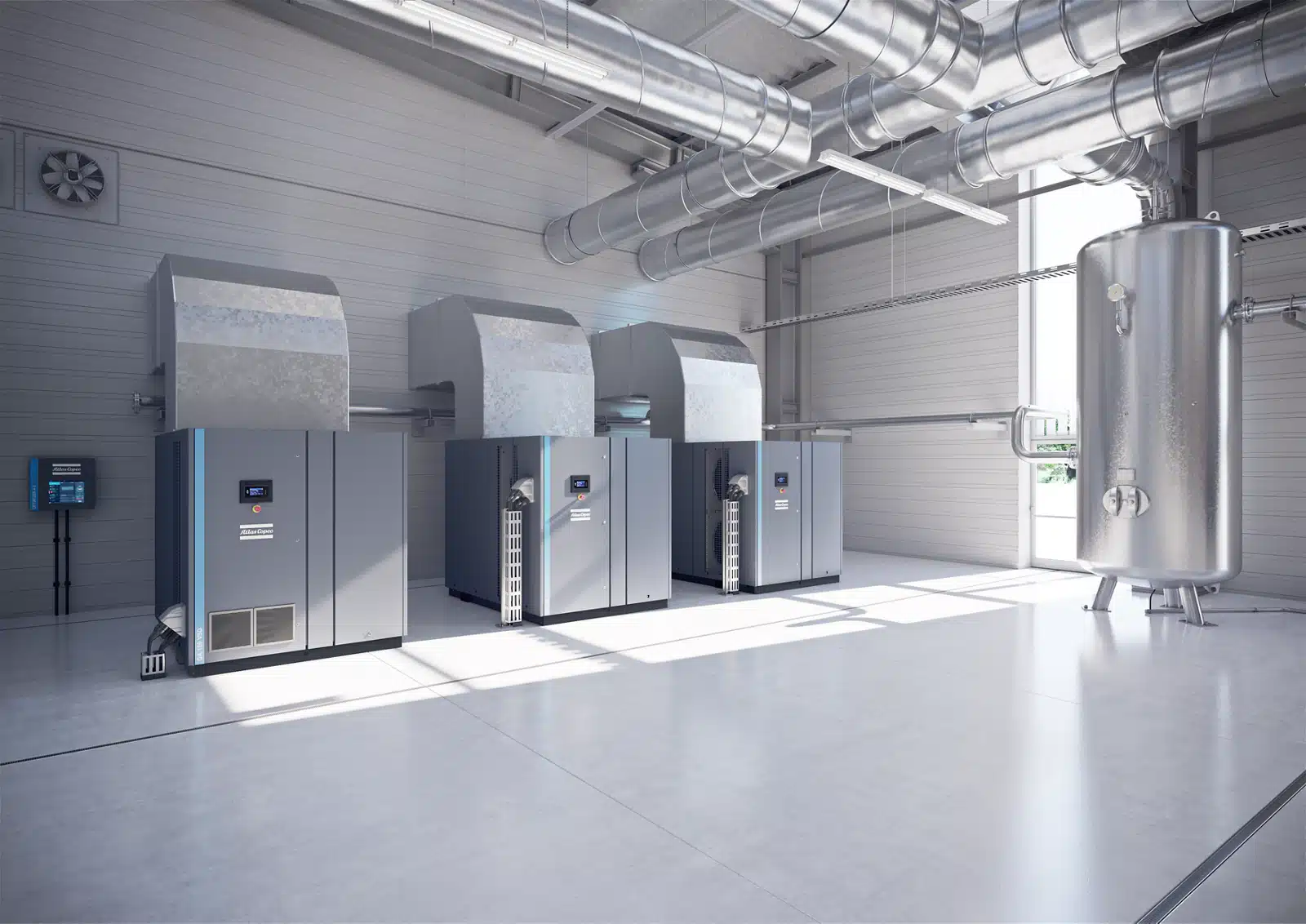
For most air-cooled compressors, this is the easiest choice, and it usually doesn’t require much work to set up. It uses ductwork to move the hot exhaust air from the compressor’s cooler directly into a workshop, warehouse, or loading bay to heat the space.
This method can recover up to 96% of the energy used. In warmer weather, a louvre system vents the hot air outside. This helps to keep the area cool.
What is Hydronic (Water-Based) Heat Recovery?
What is Hydronic (Water-Based) Heat Recovery?
In water-based, or hydronic, systems, heat is taken from the compressor’s oil or water loop. That warmth is then redirected into a clean water line, ready to be used elsewhere. It then transfers it into a separate clean water supply.
This recovered heat can then be reused elsewhere in the process.
It’s a popular method that can generate a continuous supply of hot water. But the performance does depend on the compressor type:
Atlas Copco GA VSD⁺ Series
Atlas Copco GA VSD⁺ Series
These oil-injected compressors can be equipped with recovery units to deliver hot water up to 85°C.
Atlas Copco ZR/ZT Oil-Free Series
Atlas Copco ZR/ZT Oil-Free Series
Water-cooled compressors that deliver hot water – with temperatures reaching up to 90°C. They are ideal for processes that demand consistent, high temperatures.
What is an Energy Recovery Audit?
The first step is a data-driven Energy Recovery Audit.
This is a crucial part of our service, often using the Atlas Copco AIRScan process. This audit is not a simple guess; it quantifies your specific heat load, measures your current energy use, and identifies the exact recovery potential.
From this data, we calculate a precise and reliable ROI, giving you the facts needed to make an investment decision.
You can learn more about the full process by reading about the Benefits of a Compressed Air Audit. This audit is the first step in any plan for how to Reduce Your Air Compressor Costs.
How Does Control Gear Handle Installation and Integration?
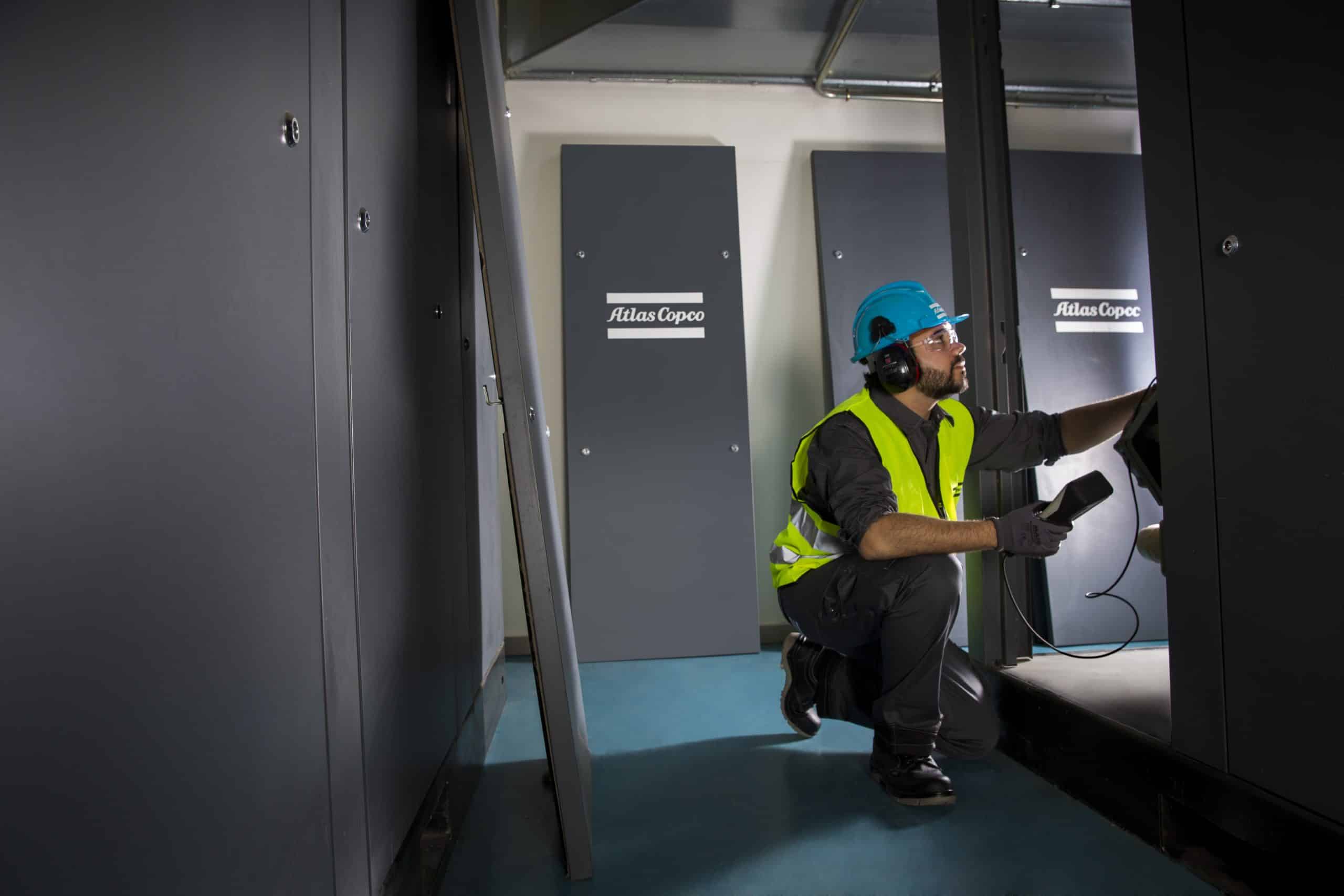
As an Atlas Copco Premier Distributor, our certified engineers are experts at installing factory-designed recovery kits for GA VSD+ and ZR/ZT compressors.
We also design and retrofit custom heat recovery solutions for all other major compressor brands.
Crucially, every installation includes a fail-safe bypass valve. This guarantees your compressor’s primary cooling is never compromised and ensures production uptime. Combining recovery with Variable Speed Drive (VSD) Compressors makes the entire system even more efficient.
50 Years Experience
Why Work With Us?
- One of the largest independent Fluid Power companies operating in the United Kingdom
- Atlas Copco Premier Distributors
- Diverse Market Coverage including 9 key specialisms
What is the Business Case for Energy Recovery?
The primary business case for energy recovery is a rapid financial return by cutting energy costs, supported by significant environmental and compliance benefits.
What is Air Compressor Energy Recovery?
The energy recovery process for air compressors is vital.
Air compressors give off a huge amount of heat. In most setups, that energy just disappears through the cooling system. An energy recovery system changes that.
The system traps that extra heat and redirects it where it’s useful. It might warm process water, feed into your boiler, or take the chill off workshop areas. Over time, that recovered energy helps lower costs – as well as shrink your carbon impact.
Energy recovery in air compressor systems stops this waste. It captures this thermal energy and converts it, turning a major operational liability into a free, reliable, on-site energy source.
What Are the Financial Savings and ROI?
Every kilowatt you recover is money back in your pocket.
Energy recovery typically pays for itself within 1–3 years – and the savings continue for the life of your system. These systems can cut a facility’s heating bills by 20–30% and typically deliver a full return on investment within 1–3 years.
For many UK industrial sites, payback typically falls within 12 to 24 months.
Return on investment often improves further through added benefits – lower HVAC costs from reduced heat load, and longer compressor lifespan thanks to steadier operating temperatures.
What Are the Environmental and Compliance Benefits?
Reusing waste heat directly cuts your carbon footprint and supports compliance goals.
- Carbon Reduction: Shows clear progress toward corporate Net Zero and SBTi goals.
- UK Compliance: Meets ESOS, ISO 50001, and ISO 14001.
- Funding and Tax Support: Many businesses can claim back a portion of their investment through the Annual Investment Allowance. Further support might also be available via national or regional funding programmes – such as the Industrial Energy Transformation Fund (IETF). Control Gear can assist in finding suitable funding to speed up project payback.
How Does Control Gear Deliver Energy Recovery Solutions?
With more than 50 years of experience in compressed air systems, we handle every part of your energy recovery project – from audit and design to installation and long-term servicing
Our team supports clients throughout South Wales and the West – including Cardiff, Newport, Swansea, Bristol, Stroud, and Swindon.
For businesses in South Wales and the West – from Bristol to Swansea – Control Gear provides expert energy recovery solutions.
We help industrial clients design and install systems that deliver a measurable return on investment, often within 1-3 years.
Speak to our team about booking an Energy Recovery Audit for your facility.
Get in touch
Contact Us
Stop wasting paid-for energy. Our engineers can show you exactly how much heat your compressors generate – and how much you can save by recovering it. Book your no-obligation Energy Recovery Audit today or call 01792 899 110 to speak to our team.
- Visit us Heol Groeswen, Treforest Industrial Estate, Pontypridd, Rhondda Cynon Taff, CF37 5YF
- Call us 01443 843126
- Email us enquiries@control-gear.com
Mon–Fri · 09:00–17:00
24/7 emergency call-out available
How Do You Monitor the Savings?
Modern setups use integrated monitoring tools – like Atlas Copco’s SMARTLINK – to measure exactly how much energy is being recovered.
The system provides live data on energy savings, costs, and CO₂ reductions – helping prove both performance and return on investment.